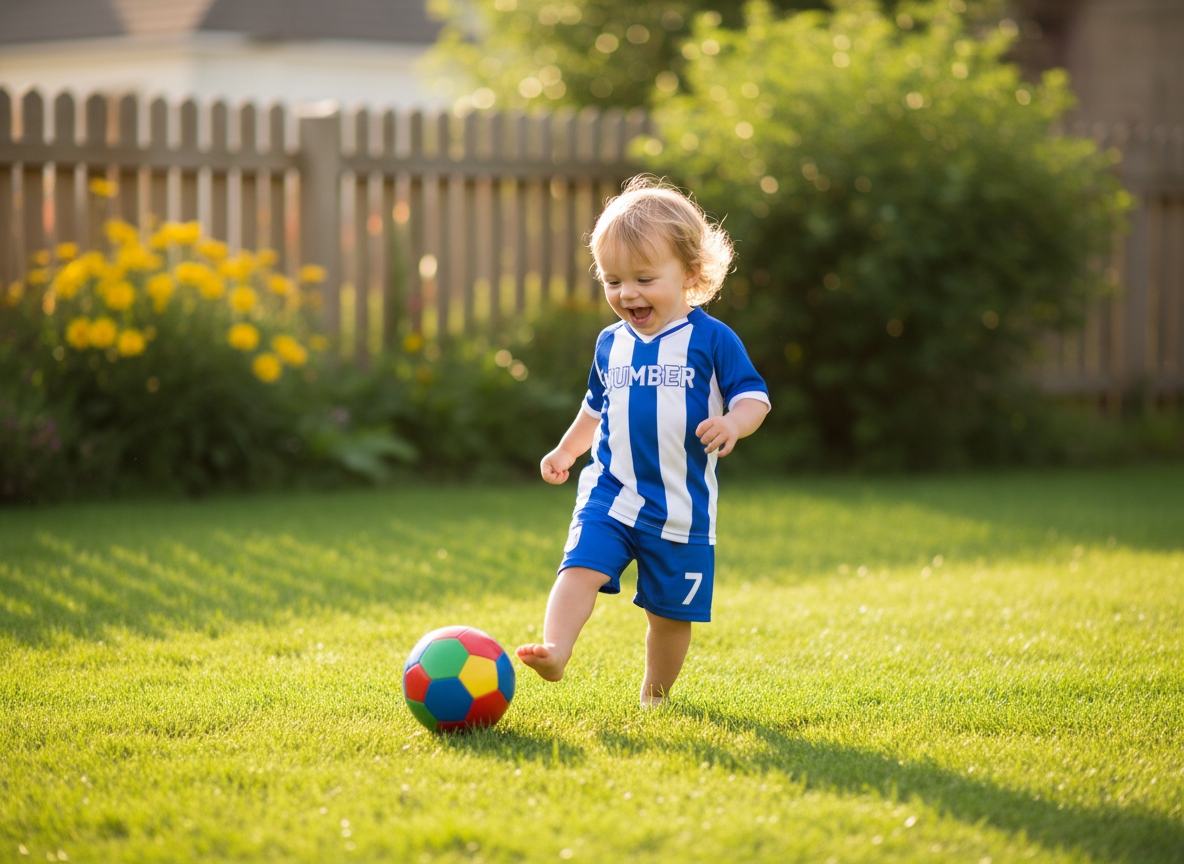
Let’s be honest: some of us are still not okay. The World Cup gave us weeks of screaming at the TV and creating an unhinged love of the beautiful game. Some of you still have the sore throat to prove it. Others are somewhere deep in the grief stages – bargaining (“maybe there’s a friendly match on”), denial (“it’s not really over”), and finally landing on acceptance, which mostly looks like refreshing the calendar to count down the months until the Women’s World Cup kicks off in Brazil next summer. Until then, we wait. We cope. We rewatch highlights we’ve already watched four times.
Or, hear me out, we redirect all of that unspent soccer energy into something productive: getting our own kids out on the grass.
Why Soccer, Why Now, Why Your Toddler
Soccer is basically the perfect sport to start a kid on, and not just because it gives you an excuse to buy tiny cleats (though, reader, that alone should be enough). The benefits stack up fast:

Physically soccer builds coordination, balance, endurance, and gross motor skills in a way that’s hard to beat: running, kicking, stopping, pivoting, all while tracking a moving ball. It’s basically a full-body obstacle course disguised as fun, and it burns off approximately 100% of the energy your child would otherwise deploy at bedtime.
Socially it’s one of the earliest low-stakes ways for kids to learn teamwork, taking turns, celebrating someone else’s win, and handling the gut-punch of losing without staging a full sit-in on the field (we’ve all seen it happen – no judgment). Team sports at a young age quietly teach cooperation and communication before kids even realize they’re learning anything.
Emotionally there’s real confidence built in mastering a new skill, in being part of something bigger than yourself, and in the simple, undiluted joy of scoring a goal and being mobbed by four-year-old teammates like you just won an actual World Cup. It also teaches resilience early – missed shots, lost games, bruised knees – all in a low-pressure environment where the biggest consequence is orange slices at halftime.
And starting early matters. Young kids are natural movers and natural imitators – introducing soccer while their bodies and brains are still wiring up coordination pathways makes the skills stick more easily, and more importantly, it builds a positive association with movement and sport before “exercise” ever starts to feel like a chore. You’re not trying to raise the next global superstar (though, no pressure). You’re just trying to raise a kid who loves being active and being part of a team. The rest is a bonus.
What About the Late Bloomers?
Maybe your kid isn’t a toddler at all. Maybe they’re eleven, they just spent a month glued to the World Cup, and they’ve suddenly decided they, too, were born to bend it like their new favorite forward. Good news: soccer does not have a “you missed the window” clause. Plenty of kids discover the sport later – after watching it on TV, after a friend drags them to a pickup game, after realizing that yelling at professionals for missing an open net looks a lot more fun from the field than the couch – and they catch on just fine. Recreational and beginner leagues exist at every age, coaches are used to mixed skill levels, and an eleven-year-old with fresh World Cup inspiration and genuine motivation will often out-hustle a kid who’s been bored of drills since age five. So if your not-so-little one is suddenly begging for cleats, say yes. Enthusiasm is a better predictor of a good season than a five-year head start ever was.
Where to Actually Sign Them Up
If you’re ready to turn post-World Cup withdrawal into a Saturday morning soccer routine, here are a few solid places to start looking for local leagues and development programs:
- AYSO (American Youth Soccer Organization) — one of the largest grassroots youth soccer organizations in the U.S., known for its “everyone plays” philosophy, which is a very nice way of saying no five-year-old is riding the bench.
- US Youth Soccer — the national governing body for youth soccer, with a searchable directory to help you find local clubs and programs by state.
- i9 Sports — a great option for younger or first-time players, with a focus on skill-building, fun, and low-pressure introductory leagues.
A quick search of any of these by zip code will surface local leagues, classes, and age brackets. Most start as young as 3 or 4, so there’s no need to wait until they can actually understand the offside rule (frankly, half the adults watching this summer couldn’t either).
Gear Up the Backyard Before Game Day

You don’t need to wait for a league registration confirmation to start the fun. A backyard goal turns any random afternoon into a full match, complete with dramatic diving saves. A few essentials to get the whole family in on it:
- A backyard soccer goal set: instant home field, zero refereeing required (well… mostly)
- A baby soccer onesie: because nothing says “future star” like a jersey with a built-in diaper situation. Perfect for the encore baby.
- A Mbappé-inspired jersey for the big sibling: so they can channel their inner World Cup hero while absolutely destroying the flower bed with a wild shot.
Whether your kid ends up chasing championships or just chasing the ball in circles for twenty minutes and calling it a day, the goal (pun very much intended) is the same: get them moving, get them laughing, and maybe, just maybe, raise the next generation of people who scream at their TVs every four years right alongside you.
Next summer’s Women’s World Cup will be here before we know it. Might as well have a mini soccer star ready to cheer along by then.
This post contains affiliate links. If you make a purchase through one of these links, we may earn a small commission at no extra cost to you. Thanks for supporting the site!

Leave a Reply